Social Communication Groups
Structured peer programs designed to build confident, real-world communication skills.

At Harbor Speech Co., social communication groups provide intentional, clinician-guided opportunities for students to practice communication skills in a supportive peer setting.
Unlike unstructured social groups or free-play formats, these programs focus on explicitly teaching communication strategies and then helping students apply those skills through guided interaction.
Groups are designed to feel engaging and motivating while maintaining clinical structure and meaningful skill progression.
Each group runs as a defined short-term program so families can see clear growth and next steps.
What Makes Harbor Speech Co. Groups Different
1. Skills are explicitly taught before peer practice
2. Small group size supports individualized coaching
3. Sessions follow a predictable therapeutic structure
4. Real-life communication scenarios are emphasized
5. Parent guidance and feedback are included
6. Programs are time-limited and goal-focused
These groups are especially supportive for students who benefit from clear guidance, structured practice, and intentional coaching during peer interaction.
How Group Placement Works
Participation begins with a brief screening consultation to ensure the group environment is appropriate and supportive for your child’s communication profile.
Placement is based on:
1. Age
2. Communication strengths and challenges
3. Ability to participate in a virtual peer setting
4. Readiness for the level of social reasoning targeted
This process helps ensure that each group feels balanced, productive, and confidence-building for all participants.
Program Structure
𖦹
Program Structure 𖦹
Each social communication group runs for 8 weekly sessions in a small-group telehealth format.
Sessions are designed to build upon one another, allowing students to gradually increase independence and skill generalization.
Because peer participation is essential, consistent attendance is strongly encouraged.

Elementary Social Communication Groups
-
AGES 6-8
Who this group is for:
Students who are developing foundational conversation and friendship skills and benefit from visual supports, repetition, and structured guidance.Students may benefit if they:
• Have difficulty with turn-taking
• Interrupt or talk over peers
• Struggle to recognize basic emotions
• Need support joining or maintaining play
• Benefit from predictable routinesSkills targeted include:
• Starting and joining conversations
• Staying on topic
• Recognizing basic feelings
• Sharing and cooperative interaction
• Solving simple peer problemsProgram focus:
Building early social confidence through explicit instruction and supported peer interaction. -
AGES 7-10
Who this group is for:
Students who understand basic social rules but need support applying them consistently in real peer situations.Students may benefit if they:
• Struggle to maintain conversations
• Experience frequent peer misunderstandings
• Have difficulty with perspective-taking
• Become easily frustrated in social situations
• Need coaching through disagreement or conflictSkills targeted include:
• Expanding and sustaining conversations
• Considering others’ viewpoints
• Managing disagreement calmly
• Repairing social mistakes
• Independent peer problem-solvingProgram focus:
Moving beyond learning social rules toward understanding social reasoning. -
AGES 9-11
Who this group is for:
Upper elementary students preparing for the increasing social expectations of middle school.Students may benefit if they:
• Understand social basics but struggle with nuance
• Have difficulty navigating group dynamics
• Misinterpret social situations
• Need support managing peer conflict
• Benefit from deeper social reasoning practiceSkills targeted include:
• Advanced conversation flexibility
• Social inference and hidden meaning
• Assertive communication
• Emotional regulation in peer settings
• Middle school readiness strategiesProgram focus:
Strengthening independence, confidence, and higher-level social thinking.
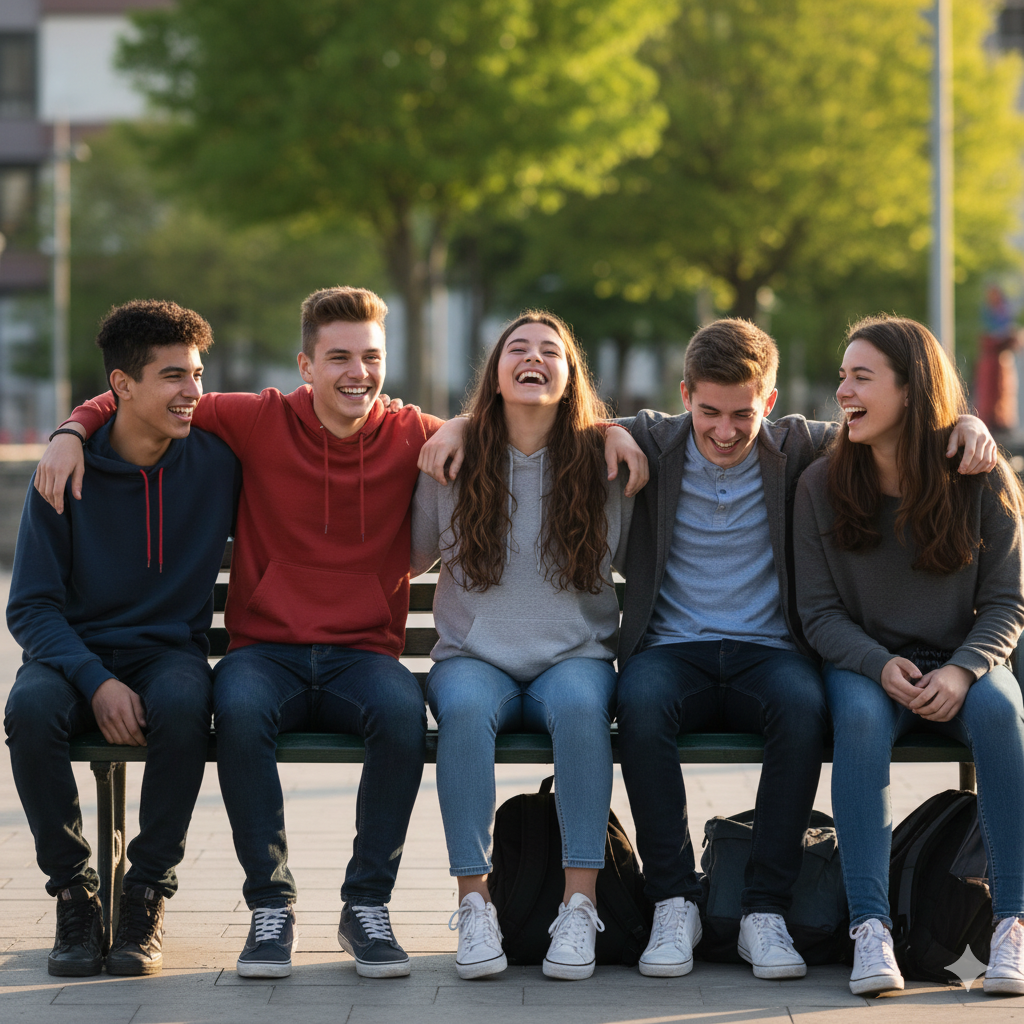
Teen Social Communication Groups
-
AGES 12-14
Who this group is for:
Students who benefit from structured support strengthening conversational balance, tone awareness, and peer interaction skills.Students may benefit if they:
• Dominate or withdraw from conversation
• Misread tone or intent
• Experience recurring peer misunderstandings
• Need guided coaching in social situationsSkills targeted include:
• Balanced conversational participation
• Topic maintenance
• Understanding tone and delivery
• Intent vs impact awareness
• Conflict repair strategiesProgram focus:
Providing structured social coaching while gradually building independence. -
AGES 13-17
Who this group is for:
Teens ready to develop deeper social awareness, nuanced communication, and independent problem-solving.Students may benefit if they:
• Struggle with subtle peer dynamics
• Have difficulty managing disagreement
• Misinterpret social subtext
• Want greater social confidenceSkills targeted include:
• Conversation threading and flexibility
• Reading between the lines
• Respectful disagreement
• Emotional regulation in peer interactions
• Real-world social decision-makingProgram focus:
Applying communication skills in authentic, discussion-based scenarios. -
AGES 15-18+
Who this group is for:
High school students preparing for increased independence in academic, workplace, and social environments.Students may benefit if they:
• Avoid difficult conversations
• Need self-advocacy support
• Struggle with executive functioning + communication
• Need practice with professional communicationSkills targeted include:
• Academic communication strategies
• Email drafting and digital communication
• Interview preparation
• Self-advocacy and boundary setting
• Workplace and real-world conflict navigationProgram focus:
Integrating communication skills with independence and transition readiness.
Enrollment Details
Interested in a group placement? Schedule a screening consultation to determine the most supportive program level for your child.